
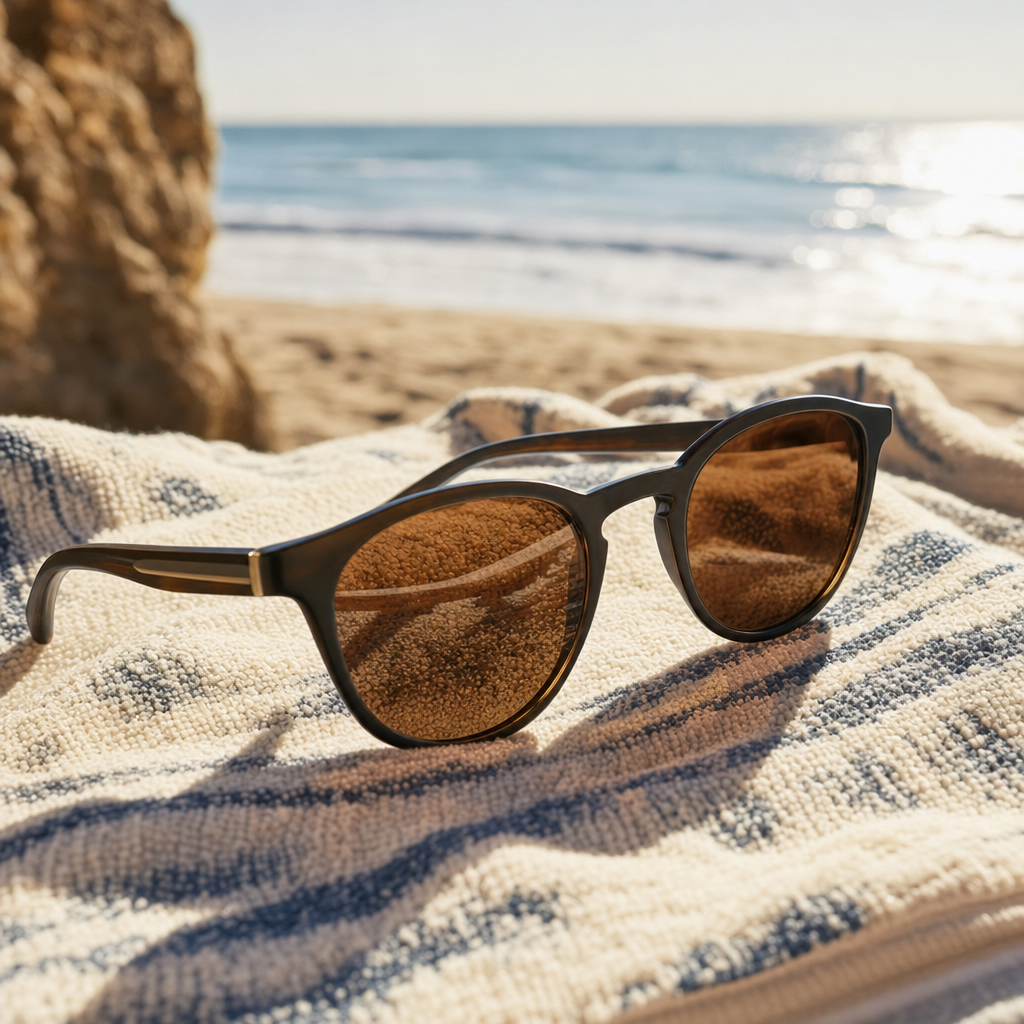
Introduction to Polarization and Glare
When searching for the best polarized sunglasses, understanding the underlying optical science is the most effective starting point. Ordinary sunlight travels in waves vibrating in all directions, but when it strikes a flat surface like water, snow, or a highway, it reflects horizontally. This horizontal light wave creates blinding glare that obscures your vision, strains your eyes, and makes outdoor tasks uncomfortable. Polarized lenses feature a special chemical filter applied to the surface, acting essentially like a microscopic vertical Venetian blind. This filter blocks the horizontally oriented light waves while allowing vertical light to pass through, effectively eliminating the harsh glare without darkening your overall field of vision.
Beyond simple comfort, reducing glare significantly enhances visual acuity and contrast in bright environments. Without the interference of blinding reflections, your eyes can perceive colors more accurately and distinguish shapes with greater sharpness. This makes outdoor exploration much safer and more enjoyable, whether you are driving a car on a sunny afternoon or navigating a complex hiking trail. Many people assume that dark lenses alone provide adequate protection, but darkness only reduces the total amount of light entering the eye, whereas polarization specifically targets the blinding reflections that standard sunglasses fail to correct. Consequently, finding the right pair involves looking beyond mere tint darkness and examining the quality of the optical filter embedded within the lens.
Key Benefits for Outdoor Activities
Water sports enthusiasts and anglers frequently rely on specialized eyewear because water surfaces produce some of the most intense glare imaginable. Standard sunglasses simply reduce brightness, leaving fishermen struggling to see beneath the surface ripples where fish and underwater structures hide. Polarized lenses cut completely through surface reflections, allowing wearers to peer deep into lakes, rivers, and oceans with remarkable clarity. This advantage extends beyond fishing to boating, sailing, and paddleboarding, where spotting submerged rocks, coral reefs, or other watercraft is essential for safety. By neutralizing the blinding mirror effect of open water, these lenses transform a hazy aquatic view into a transparent window.
Winter sports and driving represent two other scenarios where glare reduction is paramount for safety and comfort. Snow acts as a massive reflector, bouncing up to eighty percent of UV light and sunlight directly into your eyes, leading to potential eye strain and temporary snow blindness. Polarized options tame this intense winter brightness, making skiing and snowboarding much more manageable. Similarly, drivers face constant glare from wet asphalt, car hoods, and windshields during daily commutes. By cutting these distracting reflections, drivers can react faster to road hazards, braking lights, and lane changes, thereby reducing driver fatigue on long journeys.
Lens Materials and Construction Quality
When evaluating eyewear options, the choice of lens material greatly impacts performance, weight, and durability. Glass lenses offer the absolute highest optical clarity available and possess superior scratch resistance, making them a favorite for purists who demand pristine vision. However, glass is noticeably heavier and more brittle than other materials, posing a potential risk of shattering upon heavy impact. Polycarbonate and CR-39 plastic lenses provide a lightweight, shatter-resistant alternative that is ideal for active lifestyles, sports, and everyday wear. Modern manufacturing techniques have significantly closed the optical performance gap between high-end plastics and traditional glass, ensuring that lightweight options still deliver exceptional visual sharpness.
Another critical construction factor involves where and how the polarizing film is integrated into the lens structure. In budget-friendly models, the polarizing filter is often applied as a thin external film coating on the front surface, which can easily scratch, peel, or degrade over time when exposed to sweat, saltwater, or abrasive cleaning cloths. Premium manufacturing embeds the polarizing filter securely inside the middle of the lens sandwich during the molding process or infuses the polarizing chemicals directly into the material. This sandwich construction protects the vital filter from environmental damage, significantly extending the lifespan and consistent performance of the eyewear.
Frame Selection and Ergonomic Fit
Even the most advanced optical lenses will fail to perform adequately if the frame design allows stray light to leak in from the top, bottom, or sides. Frame style plays a vital role in overall protection, especially for individuals spending extended hours in intense alpine or marine environments. Wrap-around frames curve gracefully around the contours of your face, blocking peripheral light and preventing wind, dust, and debris from irritating your eyes. When selecting frames, look for designs that rest comfortably on the bridge of your nose without pinching and feature secure temple arms that do not slip when you perspire during physical activity.
Frame materials also contribute heavily to comfort and durability over years of regular use. Traditional acetate frames offer a classic aesthetic and can be easily adjusted by an optician for a customized fit, though they can feel slightly heavy during prolonged wear. Lightweight nylon and titanium frames provide incredible flexibility and strength, resisting warping and damage from extreme temperatures or accidental drops. Additionally, rubberized nose pads and temple tips provide crucial grip, ensuring your eyewear stays securely in place whether you are running a marathon, casting a fishing line, or simply relaxing on a sunny beach.
Important Limitations to Keep in Mind
Despite their numerous advantages, polarized lenses are not universally ideal for every situation and come with a few notable limitations. The most prominent drawback is their interaction with certain digital screens, such as smartphone displays, vehicle dashboard instruments, liquid crystal displays, and ATM screens. Because these electronic screens also utilize polarizing technology, viewing them through polarized eyewear can cause the screen to darken completely, distort colors, or become entirely unreadable at specific viewing angles. Pilots, for example, are often advised against wearing polarized optics because they can obscure critical cockpit instrumentation and make digital flight displays difficult to monitor.
Another limitation involves downhill skiing in overcast conditions or shadow-heavy terrain where distinguishing ice patches from soft snow is crucial. While polarization is fantastic for bright, sunny days on the slopes, it can sometimes flatten the visual contrast of snow contours under flat lighting, making moguls and icy patches harder to spot. It is also important to remember that polarization alone does not guarantee ultraviolet protection. While almost all modern quality eyewear blocks UVA and UVB rays, polarization simply cuts glare and has no inherent relationship with UV absorption, meaning buyers must always verify that their chosen eyewear explicitly offers one hundred percent UV protection.
Frequently Asked Questions
Do polarized sunglasses block one hundred percent of UV rays?
Polarization and UV protection are two entirely different technologies. Polarization reduces glare from horizontal surfaces, while UV protection blocks harmful ultraviolet radiation. Always check the manufacturer specifications to ensure your glasses explicitly state full UV400 protection.
Why do digital screens look dark or distorted through polarized lenses?
Many digital screens use polarizing filters to display images. When you wear polarized lenses, the two filters interact at perpendicular angles, causing the screen to dim, distort, or turn completely black depending on your viewing angle.
Are polarized options better for everyday driving?
Yes, they are generally excellent for driving because they eliminate blinding glare reflecting off wet pavement, car hoods, and windshields. However, some drivers with older digital dashboards may experience visibility issues with certain instruments.
How can I test if a pair of sunglasses is truly polarized?
You can easily test polarization by holding two pairs of polarized lenses in front of each other and rotating one ninety degrees. If the overlapping area turns completely dark and blocks light, the lenses feature genuine polarization filters.
Article Was Generated By AI.