
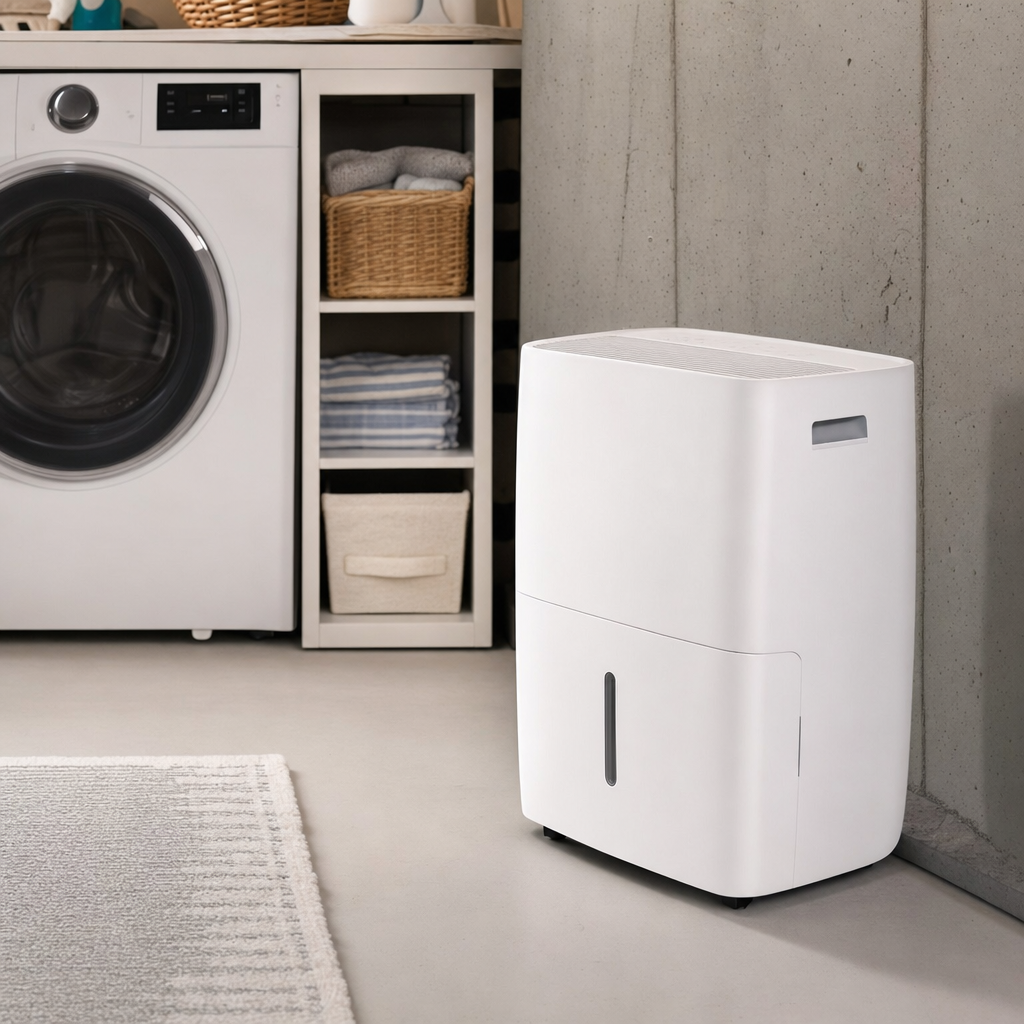
Understanding Excess Moisture and Why You Need a Dehumidifier
Excess humidity in residential environments can create an uncomfortable living space while fostering an ideal habitat for mold, mildew, and dust mites. When relative humidity levels rise above sixty percent, moisture tends to accumulate on cooler surfaces, leading to peeling wallpaper, warped wood, and musty odors that permeate furniture and clothing. A reliable humidity control device actively extracts excess vapor from the air, helping maintain indoor levels between thirty and fifty percent for optimal comfort and structural preservation.
Beyond protecting your property, managing indoor moisture contributes significantly to respiratory health and overall well-being. High humidity often exacerbates allergy symptoms and asthma by creating a thriving ground for microscopic irritants. By pulling surplus water vapor out of the air, these appliances help neutralize airborne triggers, resulting in fresher indoor air and a more pleasant atmosphere throughout damp basements, crawlspaces, or poorly ventilated bathrooms during muggy summer months.
Key Types of Dehumidifiers and How They Work
Refrigerant dehumidifiers represent the most common type found in residential settings, operating much like a standard household refrigerator. These units draw warm, humid air across refrigerated coils, causing moisture to condense into water droplets that drip into an internal bucket or drain hose. They perform exceptionally well in warm, damp environments such as finished basements and main living areas, where temperatures remain consistently above sixty-five degrees Fahrenheit throughout the year.
Desiccant dehumidifiers utilize moisture-absorbing materials, such as silica gel, to pull water vapor directly from the air without relying on compressors or liquid coolants. Because they do not depend on condensation coils, desiccant models excel in colder spaces like unheated garages, boats, or winter cabins where refrigerant units often freeze up and fail. Although they are generally quieter and lighter than refrigerant models, they typically consume more electricity and are best suited for smaller, cooler spaces.
How to Determine the Right Capacity for Your Space
Selecting the correct capacity requires evaluating both the square footage of the target area and the severity of the existing moisture problem. Manufacturers measure daily capacity by the number of pints of water a unit can extract over a twenty-four-hour period under standard testing conditions. A small bedroom experiencing mild dampness might only require a thirty-pint model, whereas a sprawling, completely wet basement typically demands a massive fifty to seventy-pint unit to achieve meaningful results.
Environmental conditions within the space play a critical role in calculating your exact capacity requirements. If you are conditioning a damp cellar that feels persistently wet and smells strongly of mildew, you should step up to the next higher capacity tier regardless of square footage. Conversely, areas that are only slightly humid during peak summer months can generally rely on standard sizing charts without risking underperformance or excessive energy consumption.
- Measure the exact square footage of the room or basement zone you plan to treat.
- Assess current moisture severity by checking for damp spots, condensation, or musty smells.
- Match your measurements against manufacturer sizing guides, adding capacity for exceptionally wet spaces.
- Verify power requirements and ensure you have an appropriate electrical outlet nearby.
Essential Features and Practical Placement Strategies
Modern humidity control appliances come equipped with a variety of advanced features designed to simplify daily operation and enhance safety. A built-in humidistat allows you to set a target humidity level, enabling the machine to cycle on and off automatically as conditions change. Continuous drainage options, featuring gravity drain hoses or built-in condensate pumps, eliminate the tedious chore of manually emptying heavy water buckets several times a day, making them ideal for unattended basement installations.
Proper placement determines how efficiently your equipment will extract moisture from the surrounding air. Positioning the device centrally in an open area allows unimpeded airflow, whereas pushing it tightly against a wall or tucking it behind furniture restricts intake vents and reduces overall effectiveness. Ensure that doors and windows remain closed while the machine is running; otherwise, it will attempt to dry the entire outdoors, driving up your electric bill without solving the indoor humidity problem.
Routine Maintenance and Troubleshooting Tips
Routine maintenance is crucial for keeping your humidity control equipment running efficiently and extending its operational lifespan. Dust and pet dander can quickly accumulate on the intake filter, restricting airflow and forcing the compressor to work harder than necessary. You should inspect and clean the air filter every two weeks using warm water and mild detergent, ensuring it dries completely before sliding it back into the appliance.
Preventing mold growth inside the water collection bucket and internal reservoirs requires regular washing with a mild vinegar solution to eliminate bacterial buildup and unpleasant odors. If your unit begins blowing room-temperature air without collecting any water, check for frozen coils, which often occur when operating in environments that are too cold. Turning off the machine temporarily to let the ice melt, or switching to a desiccant model, usually resolves this common operational issue.
Frequently Asked Questions
What is the ideal indoor humidity level to maintain?
The ideal indoor relative humidity level falls between thirty and fifty percent. This range prevents mold growth and dust mite proliferation while ensuring the air does not feel uncomfortably dry.
Can I run my dehumidifier continuously 24/7?
Yes, many models are designed for continuous operation, especially when connected to a continuous drain hose or built-in pump. Modern units with humidistats will automatically cycle on and off as needed.
Why does my dehumidifier ice up during operation?
Ice formation typically occurs when the ambient room temperature drops below sixty-five degrees Fahrenheit. The refrigerant coils become too cold, causing condensed water to freeze instead of dripping into the bucket.
How much electricity does a typical dehumidifier consume?
Power consumption varies by capacity and compressor type, but most standard residential units use between three hundred and seven hundred watts, comparable to a small refrigerator or portable air conditioner.
Article Was Generated By AI.