
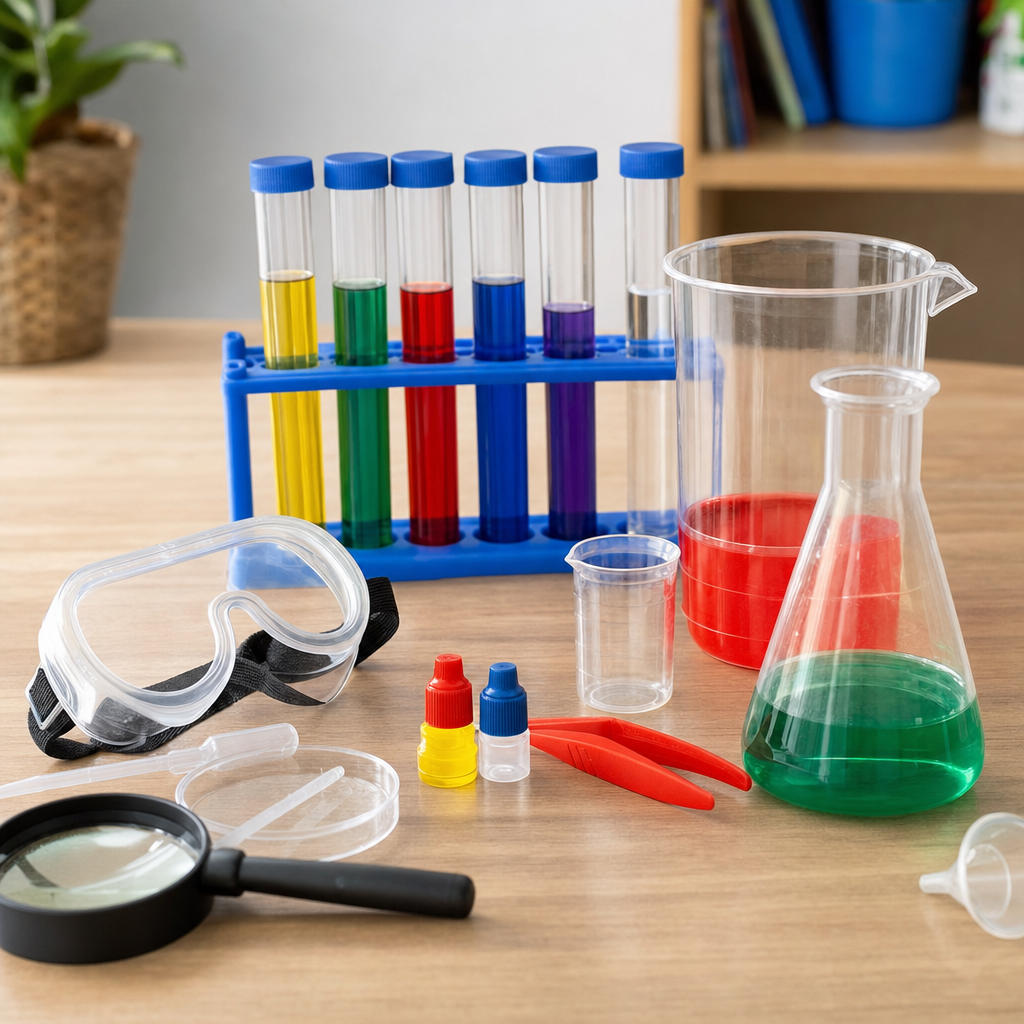
Understanding the Appeal of Educational Science Sets
The search for the best kids science kit often begins with a desire to spark curiosity and foster a lifelong love for learning in young minds. These thoughtfully designed packages bring hands-on experimentation directly into the living room, transforming abstract textbook concepts into tangible, exciting realities. Children naturally possess an innate sense of wonder about how the world works, constantly asking questions about everything from exploding volcanoes to glowing crystals. By providing structured yet open-ended materials, caregivers can channel this natural inquisitiveness into productive, educational play that feels much more like a fun game than traditional schoolwork.
Moreover, modern educational packages go far beyond simple baking soda and vinegar reactions, encompassing diverse fields such as robotics, chemistry, biology, and physics. When children actively mix solutions, build circuits, or examine microscopic specimens, they are developing critical cognitive abilities alongside fine motor skills. They learn how to follow multi-step instructions, make careful observations, record data, and understand why an experiment might not have worked out the way they initially expected. This trial-and-error process builds essential resilience, teaching young learners that making mistakes is simply a normal, valuable part of the scientific method rather than a failure.
Key Categories and Disciplines to Consider
When evaluating different options on the market, it helps to understand the primary branches of science typically represented in these educational packages. Chemistry sets remain perennial favorites, offering colorful liquid reactions, crystal growing, and safe polymer creations that visually demonstrate molecular interactions. Physics-focused bundles often include building components for roller coasters, simple machines, or solar-powered vehicles, allowing children to experiment with gravity, momentum, and renewable energy sources. Meanwhile, biology and earth science collections might feature miniature greenhouses, fossil excavation blocks, or rock tumbling equipment that encourages outdoor exploration and natural history appreciation.
Technology and engineering have also become major components of contemporary educational sets, introducing coding principles, circuit boards, and robotics assembly. These modern options prepare children for a technology-driven future by demystifying how everyday electronic devices operate. Selecting the right category often depends on the specific interests of the child. A child who constantly takes apart old toys might thrive with an electronics and engineering set, whereas a child who loves collecting rocks and leaves would likely prefer an earth science or botany bundle.
Matching Age Appropriateness and Safety Standards
Safety is always a paramount concern when selecting any hands-on educational activity involving chemicals, heat, or small parts. Reputable manufacturers clearly indicate appropriate age ranges on their packaging, which should be strictly followed to ensure both safety and developmental suitability. For younger children in the preschool age bracket, sets generally feature oversized, durable plastic components with non-toxic, household-grade ingredients that pose no significant risk if accidentally touched or spilled. These early childhood options focus heavily on sensory exploration and basic cause-and-effect relationships rather than complex formulas or precise measurements.
As children grow into middle childhood and early adolescence, sets become progressively more sophisticated, introducing real laboratory glassware, mild acids and bases, and intricate electronic circuitry. For these older age groups, adult supervision guidelines are usually specified in the instruction manuals, ensuring that complex procedures are performed safely. It is vital to read consumer reviews and check product specifications to confirm that all included materials meet recognized safety standards, such as ASTM or EN71 compliance, guaranteeing that harmful substances are kept entirely out of the home environment.
Here are important factors to keep in mind when evaluating safety and suitability for your child:
- Always verify age recommendations to prevent choking hazards or frustration from overly complex tasks.
- Check whether standard household items, such as water, scissors, or batteries, are required to complete the activities.
- Look for clear safety equipment inclusions, such as protective goggles or gloves, for chemistry-based sets.
- Assess the storage design to see if the container allows for easy cleanup and repeated use over time.
Evaluating Value, Quality, and Replay Potential
A common pitfall in purchasing educational toys is investing in a flashy product that provides only a single afternoon of entertainment before ending up forgotten on a shelf. The most valuable learning tools are those designed with high replay value, featuring consumable materials that can be easily replenished with common household items, or durable components that can be reconfigured in countless different ways. When shopping, take a close look at the instruction manual or guidebook included in the box. A comprehensive, well-written manual with colorful illustrations and clear explanations of underlying principles transforms a simple toy into an enduring educational resource.
Additionally, consider whether the package offers open-ended exploration or strictly linear, one-time projects. Products that encourage children to design their own modifications and test independent hypotheses generally provide a much better return on investment. While premium brands may carry a higher initial price tag, their superior build quality, thorough educational content, and robust customer support often make them a more rewarding choice than cheaper alternatives that rely on flimsy plastic parts and confusing, poorly translated instructions.
Practical Tips for Facilitating Experiments at Home
Maximizing the educational benefits of these hands-on activities requires some thoughtful preparation and active involvement from parents or caregivers. Setting up a dedicated workspace, such as a kitchen table covered with an easy-to-clean plastic tablecloth or silicone mat, helps alleviate stress regarding potential spills and makes cleanup remarkably fast. Before opening any packages, sit down with the child to read through the introduction and discuss the goals of the session, establishing a mindset of careful observation and thoughtful inquiry rather than rushing blindly through the steps.
Encouraging children to maintain a dedicated science journal can also dramatically enhance the learning experience. By drawing what they observe, writing down their predictions, and noting the final results, they practice essential documentation skills used by professional researchers every single day. Resist the urge to take over the experiment when things become tricky; instead, ask guiding questions that prompt the child to troubleshoot independently. This supportive approach fosters genuine problem-solving capabilities and ensures that the child feels a true sense of ownership over their scientific discoveries.
Frequently Asked Questions
What age is appropriate to introduce a child to structured science kits?
Children as young as three can enjoy sensory-based scientific exploration with sturdy, non-toxic toddler sets. More structured experiments with specific instructions usually become suitable for children aged six and older.
Are the chemical components included in standard kits dangerous?
Most consumer kits use mild, food-grade ingredients like citric acid, baking soda, and cornstarch. Higher-level chemistry sets may include stronger substances, but these always require adult supervision and protective gear.
How can I make a single-use experiment kit last longer?
Many consumable components like powders and solutions can be replenished using inexpensive household ingredients. Saving the instruction manual allows kids to repeat favorite activities multiple times.
What should I do if an experiment does not yield the expected results?
Treat unexpected outcomes as a learning opportunity rather than a failure. Encourage your child to review the steps, check measurements, and discuss why the result differed from the prediction.
Article Was Generated By AI.