
Understanding the Appeal of Radio-Controlled Vehicles
The fascination with miniature motor vehicles spans generations, bringing together engineering enthusiasts and casual hobbyists alike. When people search for the best remote control car, they are usually looking to understand the vast spectrum of available models, ranging from simple toy-grade gadgets to sophisticated hobby-grade machines. These sophisticated devices offer a unique blend of mechanical design, speed, and hands-on customization that appeals to all ages. Modern technology has significantly advanced these hobby items, making them faster, more durable, and vastly more responsive than their historical predecessors.
Evaluating what makes a particular model stand out involves looking closely at its underlying technology and structural build. Unlike traditional toys found in standard department stores, quality remote-controlled models feature independent suspension systems, proportional steering, and sophisticated radio frequency controllers that eliminate signal interference. Enthusiasts often spend hours fine-tuning these components to achieve optimal performance on various terrains, whether they are navigating smooth asphalt roads, conquering rough dirt tracks, or racing through backyard obstacles.
Key Categories and Scale Sizes Explained
Categorizing these vehicles typically begins with understanding their physical proportions relative to real automobiles. Scale measurements, such as 1/10th or 1/18th, indicate how much smaller the miniature vehicle is compared to a full-sized counterpart. A 1/10 scale model is among the most popular sizes because it strikes an ideal balance between stability, speed, and ease of transport. Smaller scales, like 1/24th or 1/28th, are exceptionally well-suited for indoor use on hardwood floors or tabletops, whereas massive 1/5th scale fuel-powered beasts require wide-open outdoor spaces.
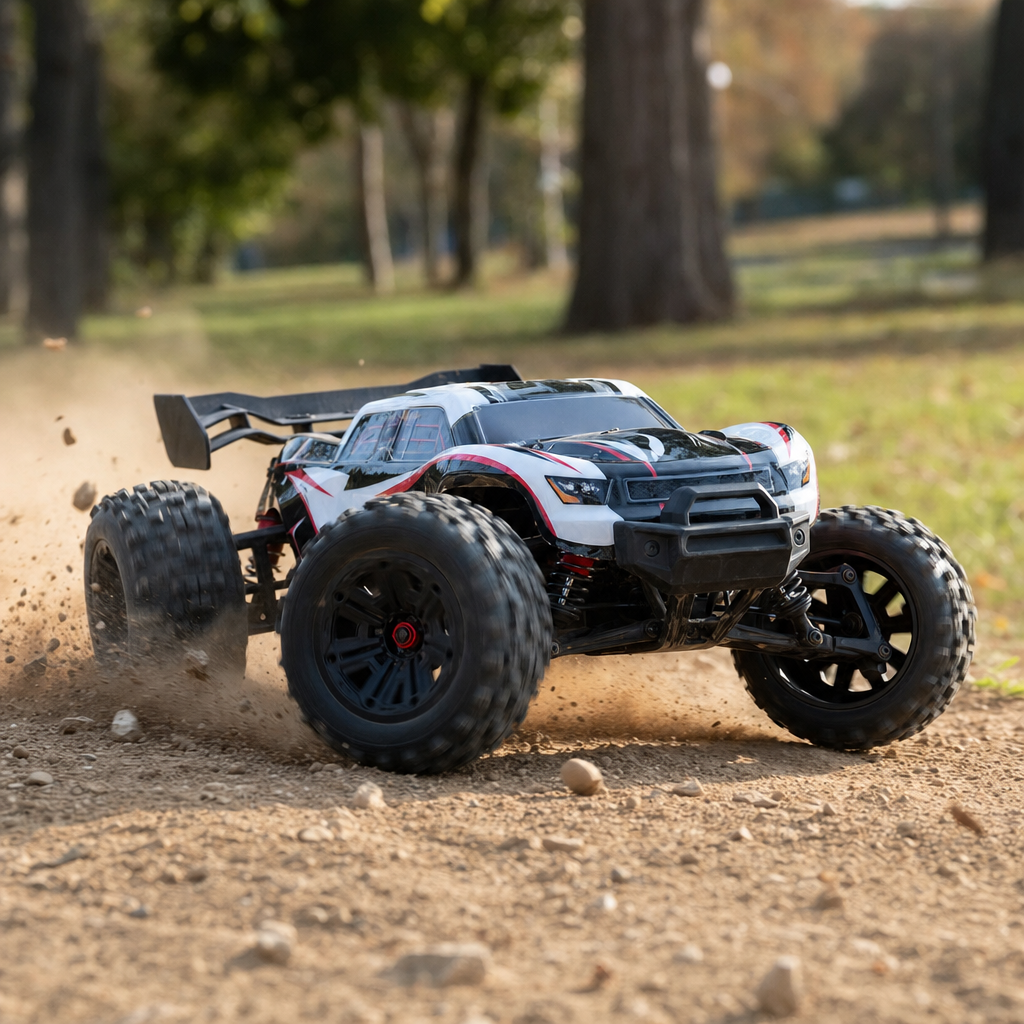
Beyond physical dimensions, vehicles are sorted into specific functional categories designed for different driving styles and environments. Buggies and truggies are engineered for racing on dirt tracks with high-speed stability, while monster trucks feature massive oversized tires capable of rolling over almost any obstacle in their path. Rock crawlers utilize high-torque electric motors and specialized articulated suspension to slowly and meticulously climb over steep rocky inclines, prioritizing torque and traction over sheer velocity on straightaways.
Here are the primary vehicle categories you will encounter while researching:
- Monster Trucks: High ground clearance and huge tires built for bashing and rough terrain.
- Short Course Trucks: Scale realism with rugged bumpers designed for competitive track racing.
- Rock Crawlers: Specialized low-speed vehicles featuring extreme suspension articulation for climbing.
- On-Road Touring Cars: Low-profile designs optimized for smooth asphalt and paved parking lots.
Power Sources: Electric Versus Nitro and Gasoline
The power source driving a model dictates its overall maintenance requirements, operating costs, and overall performance characteristics. Electric-powered models have become the dominant choice for the vast majority of hobbyists due to rapid advancements in lithium-polymer battery chemistry and brushless motor efficiency. These electric systems deliver instant torque, quiet operation, and the convenience of running the vehicle either indoors or in noise-sensitive residential neighborhoods without disturbing nearby residents or local wildlife.
Conversely, nitro and gasoline-powered vehicles offer an entirely different sensory experience that traditional electric models simply cannot replicate. These combustion engines require specialized fuel mixtures, careful carburetor tuning, and routine engine break-in procedures that mimic real internal combustion mechanics. The authentic engine exhaust sounds, distinct smells, and the requirement for mechanical troubleshooting attract a dedicated segment of traditionalists who view engine maintenance as an integral part of the overall hobby experience.
Essential Features and Technical Specifications
Navigating technical specifications requires familiarity with terminology that defines how a vehicle performs and handles. The distinction between brushed and brushless electric motors is critical for buyers to understand early in their research. Brushed motors are cost-effective and straightforward, making them ideal for casual drivers, whereas brushless motors offer significantly higher efficiency, faster top speeds, and vastly longer operational lifespans with minimal required routine maintenance.
Another vital specification to consider is the drivetrain configuration, which determines how power is distributed to the wheels. Two-wheel drive systems are generally lighter and easier to service, but four-wheel drive systems provide vastly superior traction and control, especially when accelerating rapidly on loose dirt, gravel, or wet surfaces. Additionally, waterproof or water-resistant electronics allow enthusiasts to operate their vehicles through damp grass, shallow puddles, and light rain without risking permanent damage to the internal receiver or speed controller.
Practical Guidance on Maintenance and Upgrades
Owning a high-performance remote-controlled vehicle naturally involves regular upkeep, cleaning, and occasional repairs after inevitable collisions. Following a structured maintenance routine after every run session significantly extends the lifespan of sensitive mechanical and electronic components. Removing trapped dirt, inspecting suspension hinge pins, checking wheel nut tightness, and properly storing rechargeable batteries are essential habits for maintaining peak operating condition over years of frequent use.
The modular nature of hobby-grade models allows owners to easily modify, repair, and upgrade virtually every individual part of the chassis. Many enthusiasts start with a standard factory model and gradually replace stock plastic components with machined aluminum or carbon fiber alternatives for enhanced durability and precision handling. Upgrading electronic speed controls and high-capacity battery packs can also breathe new life into older vehicles, offering noticeable performance improvements without requiring the purchase of an entirely new machine.
Frequently Asked Questions
What is the difference between toy-grade and hobby-grade remote control cars?
Toy-grade models are inexpensive, fully assembled units with proprietary electronics that cannot be repaired or upgraded. Hobby-grade vehicles feature replaceable modular parts, proportional steering, independent suspension, and vastly superior performance.
How fast can these hobby vehicles actually go?
Standard hobby models typically achieve speeds between twenty and forty miles per hour out of the box. Highly modified racing or speed-run models can easily exceed one hundred miles per hour with specialized gearing and high-voltage batteries.
Are replacement parts readily available for these vehicles?
Reputable hobby brands maintain extensive catalogs of replacement parts, ranging from suspension arms and gears to complete chassis assemblies, ensuring that broken components can be easily repaired rather than replacing the entire unit.
Can beginners easily drive high-speed models?
Most modern hobby transmitters feature throttle limiting switches or beginner modes, allowing novice drivers to restrict maximum power output while they learn steering coordination and spatial awareness safely.
Article Was Generated By AI.