
Understanding the Appeal of Modern Garment Steamers
The search for the best garment steamer often stems from a desire to simplify fabric care without dragging out a heavy ironing board and setting up complex heat settings. Unlike traditional irons that rely on direct heat and crushing pressure to flatten fibers, steamers use continuous hot vapor to relax fabric threads naturally from the inside out. This gentle approach makes them exceptionally popular for people with busy lifestyles who need to refresh clothes quickly before heading out the door or for those who frequently wear delicate materials like silk, chiffon, and velvet that easily scorch under standard metal soles.
Beyond basic wrinkle removal, these versatile appliances offer significant benefits regarding fabric longevity and garment hygiene. The high-temperature steam penetrates deep into textile weaves, effectively neutralizing odor-causing bacteria and dust mites that routine washing might leave behind. This makes steaming an ideal maintenance step for winter coats, heavy drapery, tailored suits, and decorative upholstery that cannot be easily tossed into a conventional washing machine. By reducing the frequency of harsh laundering and eliminating the risk of accidental iron burns, steamers help preserve the structural integrity and vibrant color of your favorite wardrobe investments over many years of use.
Exploring Standup versus Handheld Design Categories
When evaluating your options, you will quickly notice that the market divides into two primary categories: freestanding upright models and compact handheld units. Upright steamers feature a larger water reservoir built into a stable base, an integrated vertical support pole, and a flexible hose attached to a steam nozzle. These full-sized appliances typically deliver higher continuous steam output, longer run times without refilling, and built-in garment hangers or pressing boards. They represent the gold standard for dedicated laundry rooms, boutique owners, or households with heavy daily steaming demands where power and capacity outweigh portability and compact storage considerations.
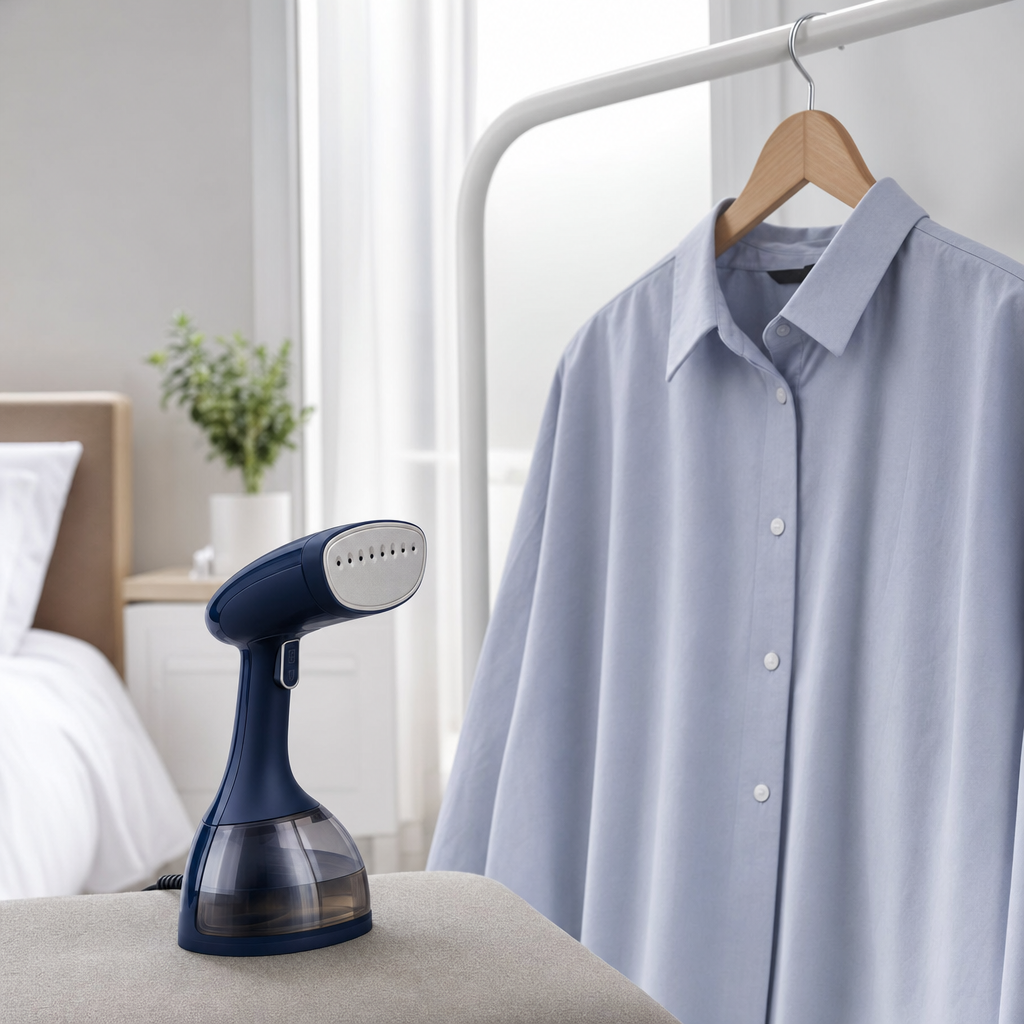
Conversely, handheld steamers prioritize ultimate mobility, lightweight construction, and space-saving storage, making them a favorite for apartment dwellers and frequent travelers. While they feature smaller water tanks that require more frequent refills during extended laundering sessions, advanced engineering allows many portable models to heat up in less than thirty seconds. Modern handheld options often incorporate spill-proof technology, enabling users to steam garments at awkward angles or even horizontally without water leakage. Selecting the right category depends entirely on your available storage space, the volume of clothing you process at one time, and whether you need an appliance that fits easily into a suitcase.
Key Specifications and Performance Metrics to Evaluate
To identify a reliable machine, you must look past marketing claims and examine critical performance metrics such as wattage, steam rate, and heat-up duration. Wattage typically ranges from 900 watts in travel-sized units up to 1800 watts or more in professional upright configurations. Higher wattage translates directly to faster boiling times and a more robust, steady flow of steam capable of piercing thick denim and heavy woolens. Additionally, pay close attention to the steam rate, which is measured in grams per minute; a higher output generally results in significantly faster and more thorough wrinkle reduction across stubborn fabric types.
Water tank capacity is another vital specification that directly dictates your operational workflow and convenience. A generous reservoir holding forty ounces or more will provide forty-five minutes of continuous steaming, allowing you to breeze through piles of laundry without interruption. Furthermore, consider the nozzle material and design, as stainless steel or ceramic soleplates can act as a secondary pressing surface to sharpen creases on collars and cuffs. Detachable water tanks also make a major difference during routine maintenance, allowing for effortless filling at bathroom sinks and simplified cleaning to prevent mineral buildup over time.
Practical Guidance for Safe and Effective Steaming Techniques
Mastering the art of garment steaming requires a few basic techniques to ensure crisp results and prevent accidental moisture damage to delicate fibers. Always hang your garment securely on a sturdy wooden or padded hanger rather than steaming clothes while wearing them, as stray steam can easily cause painful burns. Hold the nozzle close to the fabric surface, lightly touching sturdy cottons while maintaining a slight hover for fragile synthetics. Pulling the hem of the garment taut with your free hand provides the necessary tension for the steam to relax wrinkles instantly without requiring heavy physical pressure or awkward stretching.
Proper water management and routine maintenance are equally crucial for keeping your appliance functioning at peak efficiency throughout its operational lifespan. Using distilled or demineralized water is strongly recommended, especially in regions with hard water, because mineral deposits can clog internal heating elements and cause unsightly spitting. After completing your steaming session, always empty any remaining water from the reservoir to prevent stagnant moisture and mold growth inside the tank. Performing a simple monthly descaling rinse with a mixture of water and white vinegar will dissolve accumulated scale and maintain strong, uninterrupted steam pressure.
Essential Features and Accessories Checklist
When comparing different models, the inclusion of thoughtful accessories and ergonomic design features can dramatically elevate your overall user experience. Many top-tier steamers come equipped with specialized attachments such as fabric brushes to open up heavy weaves, lint removers, and crease attachments for tailoring trousers. An ergonomic handle with a lockable steam trigger prevents hand fatigue during long ironing sessions, while an automatic shut-off feature provides essential peace of mind by turning the unit off if it runs dry or overheats.
- Fabric brush attachment for loosening thick weaves and trapping pet hair
- Crease clip or tool for sharp pleats on trousers and shirt sleeves
- Heat-resistant glove to protect your free hand while pulling fabric taut
- Lint pad attachment for removing stray fibers while steaming dark clothes
- Collapsible hanging hook or integrated folding rack for easy storage
Frequently Asked Questions About Garment Steamers
Can a garment steamer completely replace a traditional iron?
For most everyday clothing, casual wear, and delicate fabrics, a steamer can easily replace an iron. However, traditional irons are still superior for creating razor-sharp creases on formal dress shirts and crisp pleats on structured trousers.
Is it safe to use tap water in my steamer?
While you can use tap water, distilled or purified water is strongly recommended. Tap water contains minerals that create limescale buildup over time, which can clog internal vents and reduce the overall lifespan of your appliance.
How do I prevent water from spitting onto my clothes?
Water spitting usually happens when the heating element is not fully up to temperature or when condensation builds up in the hose. Allow the unit to preheat completely, and tilt the hose upward to drain condensation before steaming.
Can steamers remove odors and bacteria from clothing?
Yes, the high temperatures generated by the steam kill dust mites and neutralize odor-causing bacteria. This makes steamers fantastic for refreshing garments between washes, reducing the need for frequent trips to the dry cleaner.
Article Was Generated By AI.